
You walk across the front yard and one patch of grass squishes under your shoes, even though it has not rained. Inside, the shower feels weaker than it did last month. Then you notice the outdoor faucet is still dripping long after you turned the handle tight.
That combination deserves leak detection, not another week of watching and hoping. A hidden service-line leak can waste water underground, raise your bill, wash soil away from the pipe, and leave a weakened line heading into Chicago or Milwaukee winter weather.
And timing matters. By late summer 2026, homeowners across northern Illinois and southern Wisconsin are already within a few months of normal first-freeze dates. Finding a problem now gives an outdoor plumber room to inspect, repair, excavate, or replace a damaged section before frozen soil complicates the job.
This guide explains how to tell a leaking hose bib from an underground water-line problem, what you can check yourself, and what professional leak detection should actually involve.
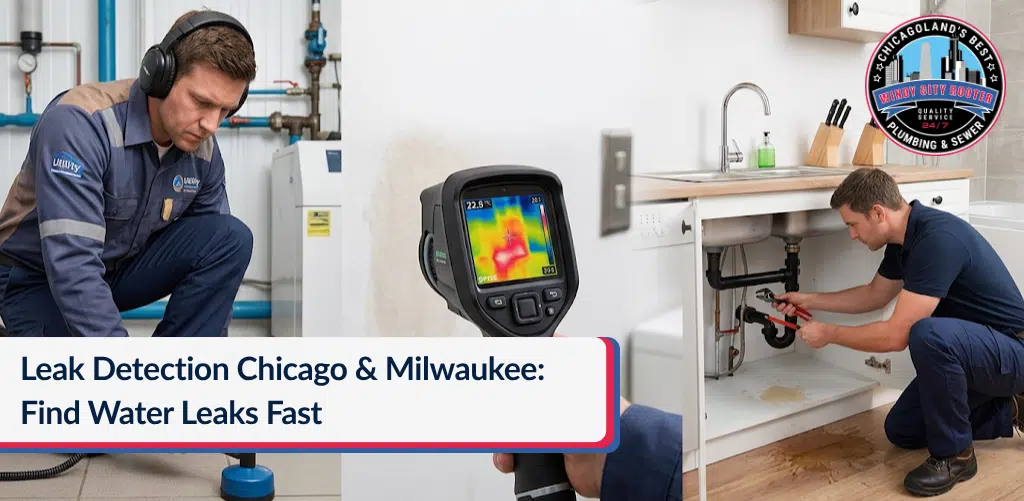
Leak detection starts by confirming that water is moving when your fixtures are off, then narrowing down where that water is escaping. A plumber may use your water meter, pressure testing, acoustic listening equipment, valve isolation, and line locating to pinpoint an underground leak without digging up the entire yard. Wet grass, low pressure, unusual water use, or a dripping outdoor faucet are all good reasons to investigate before freezing weather arrives.
What Outdoor Water Leaks Are and Why They Start
Outdoor plumbing includes much more than the faucet where you connect a garden hose. It can include your private water service line, irrigation connections, shutoff valves, hose bibs, frost-free sillcocks, and piping that passes through exterior walls.
A hose bib is the standard outdoor faucet. A frost-free sillcock is a longer outdoor faucet designed so the actual shutoff point sits farther inside the heated part of the home.
Aging or damaged water service lines
The service line carries drinking water from the municipal main toward your home. Depending on the community, part of that line may belong to the municipality and part may be your responsibility.
Corrosion, aging materials, soil movement, tree roots, poor installation, and repeated temperature changes can damage underground piping. Leak detection helps determine whether the wet spot is actually coming from that pressurized water line.
Failed outdoor faucets and valves
A faucet that will not stop dripping may have a worn washer, cartridge, packing, vacuum breaker, or damaged valve seat. Frost-free faucets can also split farther inside the wall if water was trapped during a previous freeze.
Underground fittings and connections
A buried coupling or fitting can leak without producing a dramatic geyser. The first clue may simply be unusually green grass, soft soil, or a gradual pressure drop.
[Household leaks waste nearly 1 trillion gallons of water nationwide each year, Suggested source: U.S. EPA WaterSense]
Pro Tip: If a wet patch stays wet during dry weather, do not assume it is groundwater. Professional leak detection can separate a plumbing leak from drainage, irrigation, and grading problems.
Next, look at what the rest of the property is telling you.
Warning Signs Your Yard or Water Line Is Leaking
Underground leaks are frustrating because you cannot see the pipe. You can still see the effects.
Watch for these signs:
- One wet or spongy area never dries. A wet spot in the yard over a buried service route is a classic reason to schedule leak detection.
- Water pressure drops throughout the house. A large enough water-line leak can reduce the volume reaching your fixtures.
- The meter moves when everything is off. That suggests water is flowing somewhere after the meter.
- Your water bill climbs without a clear reason. Compare similar months rather than one unusually hot gardening week.
- Grass becomes unusually green in one strip. Constant underground moisture can create a noticeably different patch.
- You hear water when no fixture is running. Hissing or rushing near the service entry can point to a pressurized leak.
- An outdoor faucet drips or leaks behind the siding. The visible drip may be the easy part. A split frost-free faucet can leak inside the wall when opened.
- Pavement settles or soil washes away. Escaping water can move soil around a damaged underground line.
Milwaukee Water Works specifically tells residents that freely flowing water from the ground, a soaked yard, or water appearing near the street can indicate an underground service-line leak.
A Northbrook homeowner may see the same symptom but should also consider whether the leak is on a Village water main or the private service portion.
Warning: If water suddenly begins bubbling through soil or pavement, avoid digging. Underground utility lines may be nearby.
Once leak detection confirms active water loss, waiting becomes the expensive option.
What Happens If You Wait Until Cold Weather
A small outdoor leak can seem manageable in August or September. Cold weather changes the equation.
Water escaping from an underground line can soften soil and enlarge the area around the damaged pipe. A dripping hose bib can also leave water where you do not want it when temperatures fall below freezing.
Chicago’s National Weather Service climate data places the normal first autumn freeze at O’Hare around October 19. Milwaukee’s National Weather Service office lists the average first 32-degree day around October 22.
That does not mean every pipe freezes on those dates. It means fall is a poor time to procrastinate.
A delayed repair can lead to higher water use, a larger excavation area, damaged landscaping, erosion, worsening pipe cracks, or a burst section during freezing weather. What could have been a controlled water line inspection in September may become emergency burst pipe repair in Arlington Heights, Skokie, Northbrook, Kenosha, or Milwaukee later.
There is also the repair-access problem. Frozen ground, snow, and cold-weather restoration can make excavation more difficult.
Plumber’s Advice: Treat persistent low pressure plus unexplained outdoor moisture as a same-week problem. Leak detection is usually cheaper and less disruptive than guessing where to dig.
Before scheduling a crew, there are several safe checks you can make yourself.
DIY Leak Checks vs. Calling an Outdoor Plumber
You do not need professional equipment to gather useful clues. You do need to know when to stop.
What You Can Handle
You can safely check your water meter, inspect hose connections, look for active dripping, and compare your recent water bills. Turn off indoor and outdoor water-using fixtures, then see whether the meter still shows flow.
You can also disconnect garden hoses before cold weather and check whether an indoor shutoff serves the outdoor faucet.
A simple meter test can tell you that water is escaping. It usually cannot tell you where the underground leak is.
When You Must Call a Pro
Call an outdoor plumber when leak detection points toward a buried service line, the main shutoff will not operate, pressure has dropped across the house, or water is surfacing from the ground.
Illinois licenses plumbers and plumbing contractors through the Illinois Department of Public Health. Registered plumbing contractors must maintain required insurance coverage. Wisconsin plumbing credentials can be checked through the Department of Safety and Professional Services.
Chicago water-service alterations and repairs require water-service permitting through the Department of Buildings, with permits issued to licensed plumbing contractors. Milwaukee also requires permits for plumbing work, with outside water services subject to municipal inspection.
Do not excavate around a suspected service line without utility locating and a clear repair plan.
Do Not Do This: Do not tighten a badly corroded outdoor faucet with excessive force. You can turn a small valve problem into a broken pipe inside the wall.
If you are already seeing a wet yard or falling pressure, Windy City Rooter can provide leak detection and water-line troubleshooting across northern Illinois and southern Wisconsin, with upfront estimates and 24/7 emergency availability.
How Professional Leak Detection and Water Line Repair Works
Good leak detection is a process of narrowing the possibilities. A plumber should not start by pointing at the lawn and ordering an excavator.
- Review the symptoms, 5 to 15 minutes The plumber checks when the wet area appeared, whether pressure changed, recent water usage, and whether irrigation is present.
- Inspect the meter and shutoffs, 10 to 20 minutes Meter movement can confirm ongoing consumption while isolation tests help narrow the affected system.
- Check pressure, 10 to 20 minutes Pressure testing helps determine whether the water service or another branch is losing pressure.
- Listen for the leak, 20 to 60 minutes Acoustic leak detection uses sensitive listening equipment to detect the sound made by pressurized water escaping underground.
- Trace the service route, 15 to 45 minutes Line locating helps establish where the buried pipe runs before anyone digs.
- Pinpoint and expose the damaged section, timing varies Once the likely leak area is identified, the plumber can plan a targeted excavation rather than trenching blindly.
- Repair or replace the line, several hours to multiple days A localized failure may allow water line repair. Repeated failures, lead, severe corrosion, or widespread damage may justify replacement.
- Retest and restore service, 20 to 45 minutes The repaired line is checked for leaks and pressure before restoration begins.
Professional leak detection may use acoustic equipment, pressure gauges, electronic locating tools, and other non-invasive diagnostics depending on the property.
That process also gives you the information needed to understand the price.
Leak Detection and Water Line Repair Costs in 2026
There is no responsible flat price for an underground leak before anyone knows where it is. Depth, material, access, landscaping, concrete, permits, and the length of damaged pipe all matter.
A legitimate estimate should explain diagnostic fees, excavation, materials, permits, inspections, restoration, warranties, and what happens if more damage is found.
Red flags include a contractor quoting full replacement without leak detection, refusing to provide a written scope, or failing to provide licensing information.
Financing can be relevant for major service-line replacement. Municipal assistance may also apply in some lead-service situations.
Price matters, but diagnosis matters first. The next decision is who you trust to make it.
How to Choose the Right Outdoor Plumber
The phrase “outdoor plumber” sounds simple, but water service work can involve municipal connections, excavation, leak locating, permits, and drinking-water safety. Hire for capability, not just availability.
Verify the basics
Check Illinois plumbing credentials through the Illinois Department of Public Health. In Wisconsin, use the Wisconsin Department of Safety and Professional Services license lookup.
Ask for proof of general liability insurance, bonding where applicable, and a written estimate. Membership in PHCC or BBB accreditation can add another trust signal, but neither replaces licensing.
Ask better questions
Ask how the contractor performs leak detection before excavation. Ask who obtains the permit, who restores the yard, and whether the repair carries a workmanship warranty.
For water-line projects, manufacturer badges matter less than plumbing credentials and local service-line experience. For outdoor faucets and fixtures, training around brands such as Moen or American Standard can still be useful.
Read reviews for details
Google, Yelp, BBB, Angi, and Nextdoor reviews are most useful when homeowners describe the actual problem. Look for mentions of water-line repair, leak locating, excavation, cleanup, pricing, and communication.
A local company also knows how responsibilities change from one municipality to another.
Plumber’s Advice: A contractor who can explain why a repair is enough is often more valuable than one who jumps straight to replacement.
That local knowledge becomes especially important as fall approaches.
Fall Prevention and Local Factors in Chicago and Milwaukee
If you are reading this in late summer 2026, now is a good time for leak detection and outdoor plumbing work. You want buried repairs completed while the soil is workable and exterior faucets winterized before the first hard cold arrives.
Use this fall checklist:
- Disconnect hoses from every outdoor faucet.
- Repair faucets that drip after being shut off.
- Check the water meter for unexplained use.
- Investigate wet or unusually green areas of the yard.
- Address low pressure before freezing weather.
- Locate and test the main shutoff valve.
- Insulate vulnerable exposed piping.
- Schedule water-line inspection if previous repairs keep failing.
Northbrook offers residents a free WaterSmart portal designed to track water use, conserve water, and help prevent costly leaks. The Village also performs distribution-system leak detection and separates Village infrastructure from portions of service lines on private property.
Milwaukee Water Works says the City owns the water-service section from the main to the curb stop, while the property owner owns the section from the curb stop to the meter. If that private section leaks, the owner is responsible for hiring a licensed plumber.
Milwaukee’s water is moderately hard at about 8.01 grains per gallon, or 137 mg/L. Mineral scale can affect faucet parts over time, although hardness alone does not explain a wet yard.
Milwaukee also continued major lead-service replacement work in 2026 and reported more than 13,000 lead service lines replaced by April. Chicago maintains its own lead-service replacement programs and requires water-service repair permits.
Windy City Rooter’s service footprint includes Antioch, Arlington Heights, Chicago, Des Plaines, Evanston, Glenview, Grayslake, Gurnee, Lake Villa, Lindenhurst, Mundelein, Northbrook, Palatine, Park Ridge, Round Lake, Schaumburg, Skokie, Waukegan, Wilmette, Bristol, Kenosha, Milwaukee, Pleasant Prairie, Racine, Salem, Trevor, Twin Lakes, and Waukesha.
Homeowners Also Ask About Outdoor Water Leaks
How do you find an underground water line leak?
Start by turning off all known water-using fixtures and checking your meter for continued flow. If the meter still shows use, a plumber can isolate systems and use professional leak detection equipment, pressure testing, acoustic listening, and line locating. The goal is to narrow the leak area before excavation. A wet yard alone tells you there is moisture. It does not prove where the water came from.
Can a leaking water line cause low water pressure?
Yes. A significant leak in the pressurized service line can reduce the amount of water reaching the house. Low pressure can also come from a partially closed valve, pressure regulator trouble, mineral buildup, or municipal supply conditions. When low pressure appears together with a wet yard or rising water use, water line leak detection should move higher on the list.
Is a dripping outdoor faucet an emergency?
A slow drip is usually not a middle-of-the-night emergency, but it should not be ignored before freezing weather. The failed part may be a washer, cartridge, vacuum breaker, or frost-free sillcock. If water is leaking behind the siding, inside the wall, or from a split pipe, shut off that branch if possible and call an outdoor plumber promptly.
Do I repair or replace an underground water line?
Repair makes sense when leak detection finds a limited defect in an otherwise sound line. Replacement becomes more attractive when the pipe has widespread corrosion, repeated leaks, obsolete material, or several failing sections. Lead-service rules may also affect the decision. Ask the plumber to explain the material, damage location, expected remaining life, and cost difference before choosing.
Frequently Asked Questions
Q: How long does water line leak detection take?
A: A straightforward diagnostic visit may take one to two hours. Complicated properties can take longer if the plumber must isolate several branches, locate the buried service route, test pressure, or distinguish plumbing leaks from irrigation and groundwater. Excavation and repair time should be quoted separately.
Q: Does water line repair require a permit?
A: Often, yes. Chicago specifically routes water-service connection, alteration, and repair permits through its Water Plan Desk for licensed plumbing contractors. Milwaukee requires permits for plumbing work and inspects outside water services. Northbrook also has permitting requirements for water-service work. Your plumber should confirm the exact municipality requirements before excavation.
Q: Is outdoor faucet repair covered by a workmanship warranty?
A: Warranty terms vary by contractor and repair. Ask for written coverage on labor and installed parts, including exclusions for freeze damage, misuse, or unrelated piping failures. A workmanship warranty should clearly state how long coverage lasts and what the company will do if the repaired connection leaks again.
Q: Can Windy City Rooter handle water line and outdoor plumbing problems?
A: Windy City Rooter provides plumbing repairs and pipe repair or replacement services across its Illinois and Wisconsin service area. The company also offers 24/7 emergency plumbing, upfront no-obligation estimates, and no extra charges for nights, weekends, or holidays. Call the Illinois or Wisconsin service number to schedule an assessment for your property.
Find the Leak Before the First Freeze
A wet yard, falling pressure, or dripping outdoor faucet is easier to deal with before freezing temperatures arrive. The first move is not digging. It is accurate leak detection that tells you whether you need faucet repair, targeted water-line repair, or a larger replacement.
Windy City Rooter serves Chicago, Northbrook, Arlington Heights, Skokie, Des Plaines, Evanston, Antioch, Lake County communities, Milwaukee, Kenosha, Racine, Waukesha, and surrounding areas. Call now to schedule leak detection and outdoor plumbing service before fall temperatures turn a manageable leak into a winter emergency.